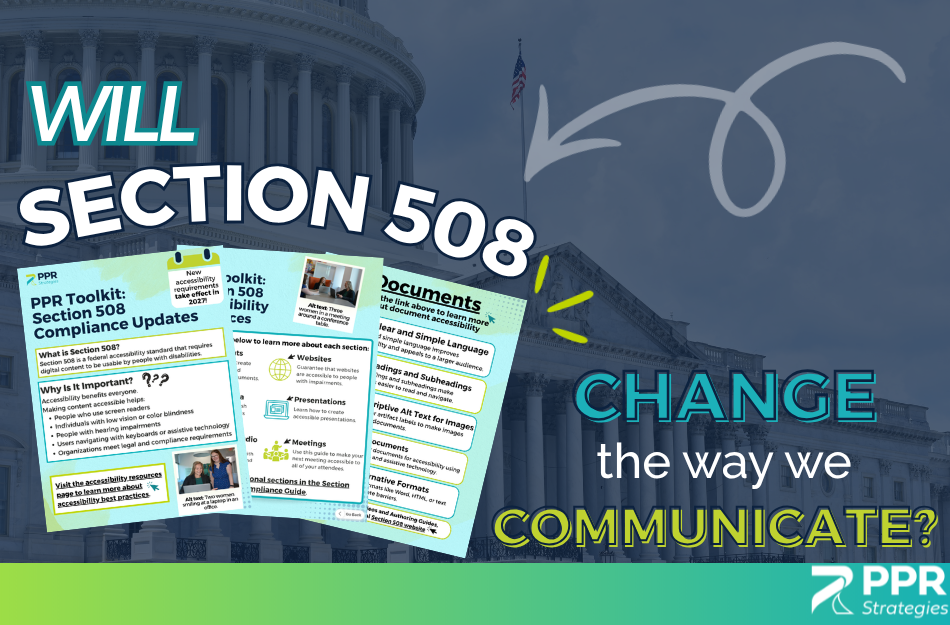
New accessibility requirements take effect in 2027. We made you a guide to make the next steps easier!
Let’s be honest: the phrase “federal compliance update” is not exactly what gets people out of bed in the morning. While this phrase may make you want to bury your head under the covers, this one really matters, and it’s more doable than it sounds.
Section 508 is a federal accessibility standard that requires digital content to be usable by people with disabilities. It covers the documents you share, the presentations you post, the videos you caption (or don’t), the social media content you publish, and the websites your community lands on when they’re trying to find you. Updated requirements kick in in 2027, which means the window to get ahead of this is now.
Accessibility Is Inclusion
Here’s the part I want you to hold onto: Section 508 compliance isn’t a bureaucratic checkbox. It’s an extension of the values most of our organizations already hold. When we add alt text to images, caption our videos, or use plain language in our documents, we’re making sure that people who use screen readers, have low vision or color blindness, rely on keyboard navigation, or process information differently can fully participate in the work we’re doing together.
Honestly, most of the best practices that make content accessible also make it clearer and more effective for everyone. Plain language, logical structure, readable fonts, consistent navigation — these are good communications practices, plain and simple
Where Most Organizations Get Stuck
The challenge isn’t usually intention. It’s knowing where to start. The Section 508 framework covers a lot of ground: documents, websites, social media, presentations, video and audio, and meetings, and it can feel overwhelming to audit everything at once.
That’s exactly why we put together the PPR Toolkit: Section 508 Compliance Updates. It’s a free resource designed to give you a clear starting point across each of these content areas: what to check, what to fix, and where to find more detailed guidance when you need it.
What’s Inside
The toolkit walks you through six key areas:
Documents – from heading structure and alt text to testing tools and alternative formats.
Websites – a plain-language checklist covering navigation, multimedia, color contrast, and form accessibility.
Social Media – quick guidance on captions, alt text, color contrast, plain language, and even accessible hashtag formatting.
Video and Audio – captions, transcripts, audio descriptions, and how to plan for accessibility before you hit record.
Presentations – practical steps to make your slides work for everyone in the room and everyone watching later.
Meetings – a checklist covering everything from accommodation requests to how you handle recordings.
Pro Tip: Start Before You Feel Ready
The best time to build accessible habits into your communications workflow is before the deadline creates stress. You don’t need to overhaul everything overnight. Start with your next document. Caption your next video. Add alt text to your next social post. Small moves, made consistently, add up fast.
Download the free PPR Toolkit: Section 508 Compliance Updates and keep it somewhere your team can find it. If you have questions about where to start, or want to talk through what this means for your communications and marketing, reach out!