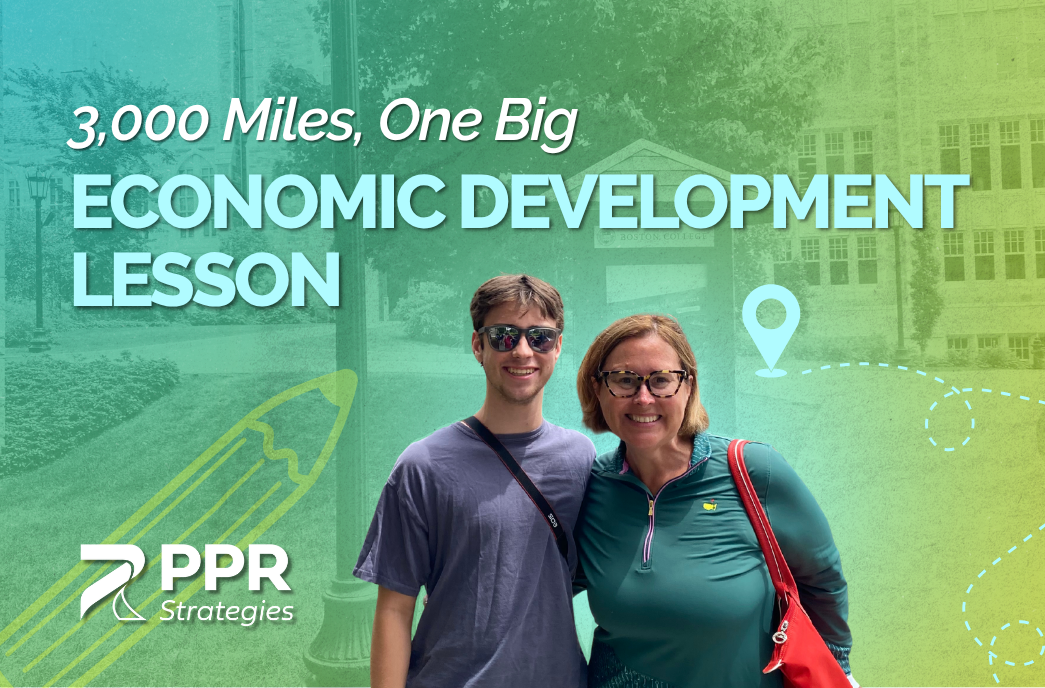
This summer, our family embarked on an ambitious (read: unrealistically long) trip from Georgia to Maine to explore colleges for our son, a rising senior. In addition to the extra five pounds I’ve tacked onto my midsection (courtesy of Maine lobster rolls, but zero regrets), I picked up some unexpected economic development takeaways along the way.
Transparency and Equity at the Core
Colleges and universities are insanely expensive, but increasingly transparent about it. After 15 college info sessions (oof), our trio felt like we could lead the sessions ourselves, as they’re largely the same (identical format, similar values, a parade of perky, engaged student tour guides who all seem to be operating on some superhuman blend of caffeine and school spirit). But what struck me most was the honesty about cost. Schools are remarkably clear about what aid they give (need-based, with income thresholds clearly spelled out) and what they don’t (merit, in many cases, though not all). They also point families to net price calculators so you can see what you might qualify for before you fall in love with a campus you can’t afford. The results can be affirming for some families and palpitation-inducing for others, but the push toward student bodies that are rich in geographic, cultural, and economic diversity is front and center, and from an equity standpoint, that transparency matters. It’s the same principle we preach in economic development: people make better decisions when the real numbers are on the table, not buried in fine print.
Prioritizing Local Partnerships and Food Producers
From the Deep South to the Green Mountains, my small-business-loving heart soared every time I heard about collaborations between local farmers, college agriculture programs, and dining halls. This “farm to campus” approach isn’t a niche or trendy move; it’s embraced by flagship state institutions like UMass Amherst, which runs a massive student farm and partners with more than 30 local producers to bring fresh food to dining halls every day. At The Knoll at Middlebury College, students work alongside local farmers, apiaries, and community volunteers to tend the land and strengthen the local food system.
These aren’t just feel-good sustainability stories; they’re local economic development in action. Every dollar a university dining hall spends with a regional producer instead of a national distributor recirculates in that local economy, supports agricultural jobs, and builds the kind of resilient food supply chain that regions spend years trying to engineer through grants and task forces. Colleges, it turns out, can be anchor institutions for local food systems the same way they’re anchor institutions for everything else.
Town-Gown Relationships for the Win
College towns can be expensive places to live: the quality of life, culture, and amenities are often second to none. But for every trendy athleisure store I spotted on Elm Street (and did not shop in; see note about lobster rolls), I found a “mom and pop” eatery just as easily: affordable, delicious food, endless refills, cozy booths, and a genuine commitment to serving everyone, not just the families in town for a tour. From Winston-Salem, North Carolina to Waterville, Maine, we found coffee houses offering student discounts and afternoon specials that kept locals in the seats; not just out-of-towners passing through with a campus map.
That’s the town-gown relationship working as intended. The best college towns treat the university as an economic partner, not just a neighbor: shared workforce pipelines, small businesses that survive because students and residents both show up, and a community identity that doesn’t evaporate every May when the students leave. Up and down the coast, the pride residents have in the place they live and work was palpable. These towns aren’t just for students passing through for four years; they’re for everyone who stays, and that distinction matters more than any glossy admissions brochure.
The Final Tally
At the end of our 3,000-mile adventure, our family logged plenty of laughs, several bags of laundry, and honest conversations about what’s possible and what’s within our means. This trip helped me see colleges, local economies, and communities through a genuinely inspiring lens, and confirmed that no matter where we stopped, the strongest towns were the ones where the university and the community were building something together, not just coexisting.
Thanks for sharing your road trip revelations with us, Meg! As you go about your own travels this summer, whether it’s a road trip, a work conference, or just a weekend away, what will you be watching for? Will you notice which local businesses are upfront with their customers, or which restaurants are sourcing from nearby farms? Will you strike up a conversation with a shop owner on Main Street, or ask a local what keeps people rooted in their community? Tell me what you spot on your own travels this year. After all, the best economic development lessons are often hiding in plain sight, no matter where the road takes you!