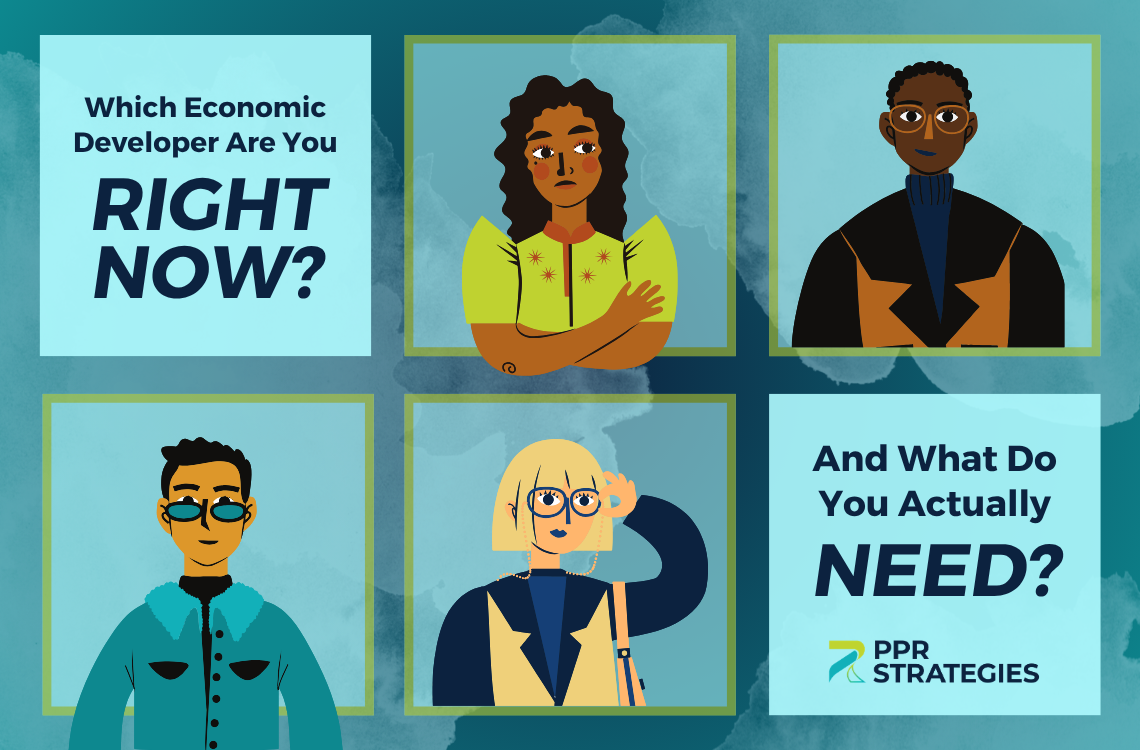
So let me ask you something personal: What’s weighing on you right now? Which persona, if any, describes you?
The Worrier: “Everyone has an opinion about my community, and no one is willing to negotiate.”
You’re not imagining it. Declining public trust and the urgent need for real civic engagement were the number one challenge that was flagged by 40% of respondents in State of the Field. So if you’re lying awake wondering how to get stakeholders in the same room without it devolving into a town hall implosion, you are in excellent, exhausted company.
Your soft skills are doing a lot of heavy lifting right now: building trust before you need it, navigating wildly different viewpoints without losing the plot, and turning reluctant community leaders into ambassadors. This isn’t the glamorous part of economic development. But it is the work, and it’s the work that makes everything else possible.
If this is you, I want you to know: the answer isn’t more data or a slicker presentation deck. Its presence, patience, and a process that’s actually methodical. Stay the course!
The Ecosystem Builder Who’s Stuck: “I know entrepreneurship matters. I just don’t know if what I’m doing is actually working.”
Here’s the honest truth about entrepreneurship support in economic development: pointing people toward a list of resources in different parts of town and during random months of the year is not the same thing as building a real, live ecosystem. And deep down, a lot of practitioners know this, but the training, the time, and the real-deal engagement haven’t caught up.
What does it actually take? It’s not just the incubator space. It’s the soft infrastructure: educational institutions teaching the fundamentals, local government understanding what it really takes, and well-networked organizations that can coordinate education, technical assistance, financing, mentoring, and networking in a connected way.
The right approach to entrepreneur engagement requires a broader view, recognizing that an entrepreneur’s success is shaped by the whole community, not just a single pitch competition with a $500 prize.
If you’re an ecosystem builder who suspects your ecosystem has some gaps, I’m inviting you to dig in, systematically, inclusively, and with a real commitment to learning what it takes, not just checking boxes.
The Acceleration Admirer: “I know the public-private partnership potential is there. I just can’t seem to unlock it.”
You’re not alone in this either. Many economic developers I’ve spoken with are intrigued by the prospect of public-private partnerships to accelerate progress, but they haven’t leveraged them yet. The gap between knowing it’s an opportunity and executing on it is where a lot of deals go to die.
Here’s some encouragement: it’s happening. In fact, Maryland just launched the Maryland Center for Public-Private Partnerships @MEDCO, a dedicated structure designed to do exactly this: leverage private sector expertise and unlock new capital sources in service of the public good. That’s a model worth watching and learning about.
The deal-makers who are succeeding right now aren’t waiting for the perfect moment. They’re building the relationships and the frameworks before they need them, and then knowing which levers to pull when the moment arrives.
The One Who’s Lonely at the Top: “It’s just…a lot. And there aren’t many people I can be real with about it.”
C-suite purgatory is real, friends. The higher you go, the fewer peers you have who actually understand the specific blend of pressures you’re carrying: organizational, political, geographic, personal. And for many economic developers, especially women, those navigating rural or under-resourced communities, or those who don’t fit the traditional mold of who “belongs” in this profession, the isolation feels like a lot.
Having a mentor isn’t a sign of weakness. It’s a sign that you understand the complexity of what you’re doing. The people doing the most meaningful work in this field almost always have someone in their corner: someone honest, experienced, and genuinely invested in their success.
If you don’t have that person yet, statewide economic development organizations have mentorship programs and affinity groups that can connect you with switched-on mentors who can help you walk through these challenges. Connect with me for resources.
The Big Question
Do you identify with these personas, or other ones altogether? I genuinely want to know. You’re not alone. Let me know which one(s), and I’ll respond with some resources that can help!