There is something special about a summer concert.
The anticipation starts long before you ever leave the house. You buy the tickets months in advance, count down the days, coordinate schedules with friends, make dinner reservations, check the weather, and debate the age-old question: drive, Uber, or spring for the parking pass?
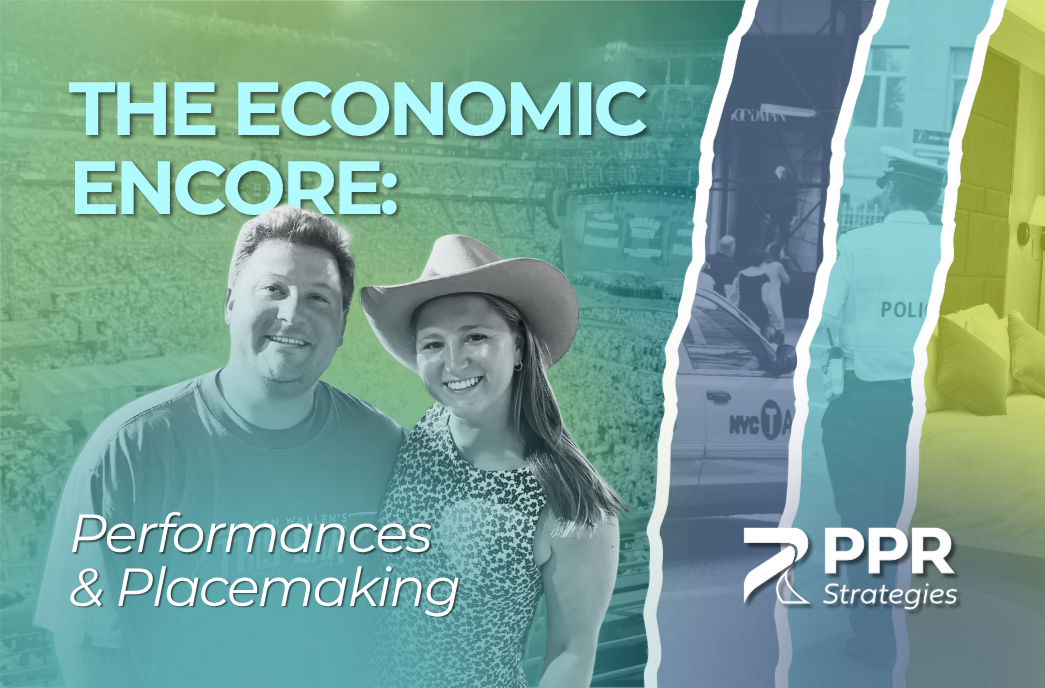
Over the past few weeks, I had the chance to see Train at Merriweather Post Pavilion and Morgan Wallen at M&T Bank Stadium. Like everyone else there, I was excited for the music. But somewhere between planning the evening and finding my seat, I realized I had already been participating in something much bigger than a concert; I was participating in economic development.
Think about everything that happens after you buy the ticket.
Maybe you book a hotel because the drive home is just a little too far. Maybe you fill up the gas tank or catch a flight. You call your friends to see who wants to come along. You make a reservation at your favorite local restaurant before the show. You stop by a local boutique because somehow this concert has convinced you that you need a new outfit. Maybe you split a party bus with friends or schedule an Uber, so no one has to worry about parking.
We met people who had driven five hours just to see Morgan Wallen perform. Five hours!
That one concert ticket became hotel stays, restaurant reservations, gas station stops, rideshares, retail purchases, and breakfast the next morning before heading home. One evening of entertainment created opportunities for dozens of local businesses.
But that’s only the part we see.
As thousands of fans made their way toward the venue, I found myself noticing everything happening around us. Police officers directing traffic. Public Works crews managing road closures. Parking attendants moving cars with incredible efficiency. Venue staff greeting guests. Security teams, concession workers, maintenance crews, rideshare drop-off zones, digital message boards, and countless people working behind the scenes to make sure everyone had a safe and enjoyable experience.
It made me stop and think about how many organizations, businesses, and partners had been working together long before the first guitar chord echoed through the venue.
The concert may have lasted a few hours, but the collaboration behind it has been years in the making.
World-class venues do not happen overnight. Neither do the roads that move thousands of people safely in and out, the hotels that welcome visitors, the restaurants that become local favorites, or the partnerships that make a community attractive enough for major tours to include it on their schedule.
These experiences are built over time through thoughtful planning, strategic investment, public and private partnerships, and a shared vision for what a community can become.
That is one of the things I appreciate most about economic development.
It is easy to think of our work in terms of strategic plans, marketing campaigns, business attraction, or workforce initiatives. Those are all important pieces of the puzzle. But at its heart, economic development is about creating places where people want to be.
Places where friends gather for dinner before a concert.
Places where families spend a summer evening making memories.
Places that visitors experience for the first time and immediately begin planning a return trip.
That is placemaking.
It is not just about buildings or infrastructure. It is about creating experiences that leave people with a positive impression of a community. Those experiences become stories. Those stories become recommendations. Recommendations turn into return visits, new investments, and sometimes even new residents or businesses.
Of course, none of that happens because of one organization working alone.
It happens because communities collaborate.
Local governments invest in infrastructure. Tourism organizations market destinations. Economic development professionals work to attract investment and support local businesses. Venue operators create unforgettable experiences. Restaurants, hotels, retailers, transportation providers, and countless others each play a role in welcoming visitors.
No single organization owns the experience.
Everyone contributes to it.
The headliner may bring people to town. But it takes an entire community to put on the show.
As the lights came up and thousands of people slowly made their way home, I found myself thinking less about the concert itself and more about everything that made it possible.
The best economic development work often goes unnoticed because, when it’s done well, it simply feels effortless. Visitors do not think about years of planning, infrastructure investments, partnership meetings, or coordinated logistics. They remember the energy of a packed restaurant before the show, the excitement of walking toward the venue with thousands of other fans, and the memories they made once the music started.
And maybe that’s exactly the point.
The true measure of a vibrant community is not just the businesses it attracts or the investments it secures. It is the experiences it creates, the memories people carry home with them, and the reasons they find to come back again.
Long after the final encore, the impact continues. To me, that is one of the most rewarding parts of economic development.
Thanks for sharing your concert revelations with us, Gabby! Tell me what you spot on your own summer outings as we wind down the season (sorry for the reminder!). Remember: the best economic development stories are often playing out right in front of us, encore included!