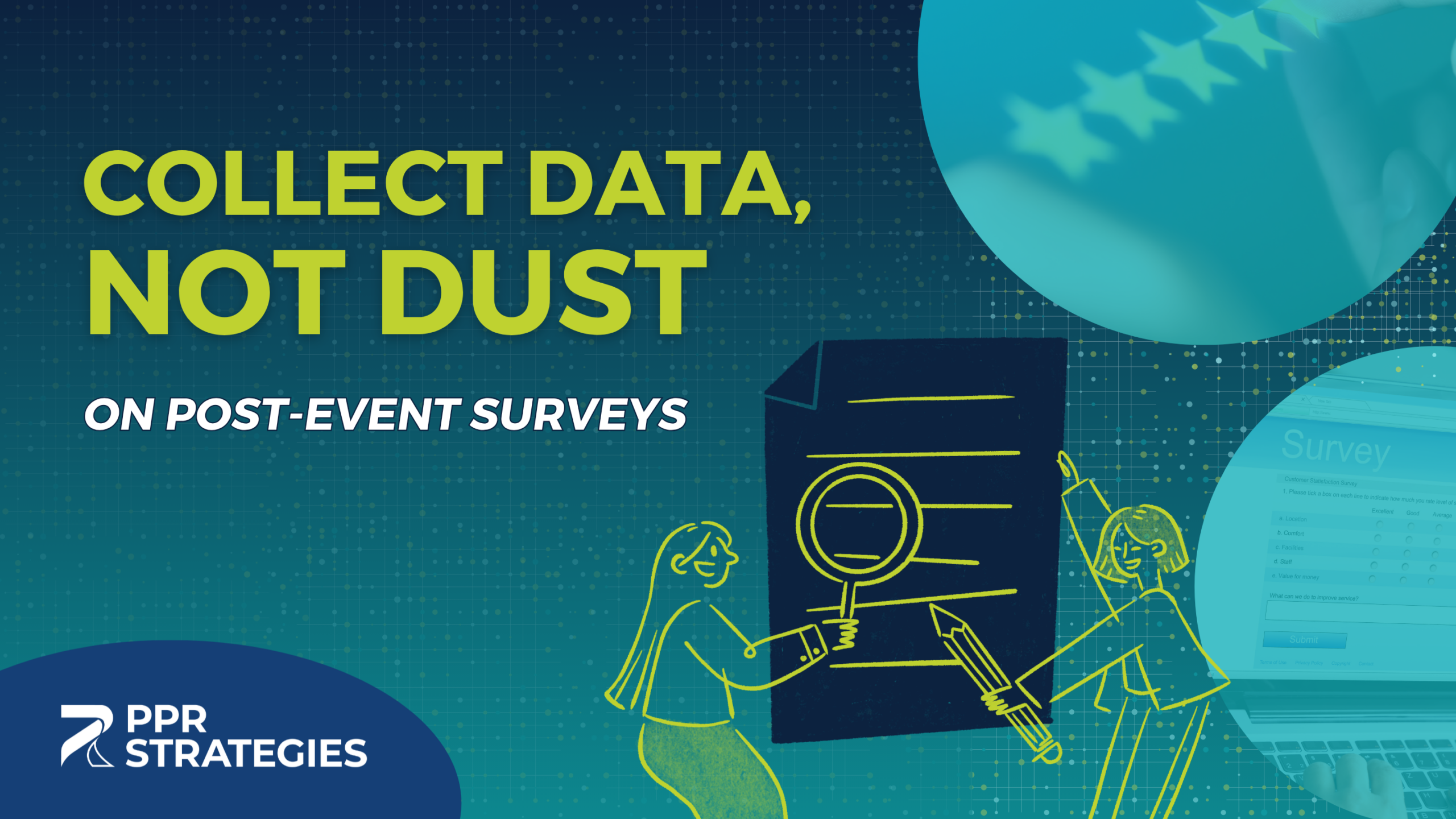
Here’s the thing about post-event surveys: people actually take time out of their day to fill them out. That’s an act of goodwill, and you should thank them for it, considering how many times you nagged them via Email or Whova. They’re telling you what worked, what didn’t, and what they needed more of. If you asked the right questions, you learned what’s keeping them up at night professionally.
And still, the standard lifecycle of that feedback looks something like this: collect → export → glance → archive → forget. Done, then dust-collecting.
Conference and event hosts in economic development and tourism spend big-time energy curating programming, recruiting speakers, and wooing sponsors. But when it comes to actually using what attendees told them? The return on that investment is almost universally disappointing.
So let’s change that. Dust off that data now, or if you have an event coming up, create an action plan for how you’ll harness that data to improve and amplify your reach.
What You Could Actually Do With That Data
Give Your Sponsors Something Worth Talking About
Most sponsorship packages still revolve around logo placement and a six-foot table in the exhibit hall (bonus points for a table near an outlet!). That’s all well and good, but it’s a missed opportunity. Sponsor-branded collaterals like a one-pager or a trend brief give your partners something tangible to share with their own audiences. “In partnership with [Sponsor], we surveyed 400 tourism professionals and here’s what they said about destination marketing in the age of AI” is a real conversation starter. Or: “Over 1,000 decision-makers in economic development attended our annual conference; you’re missing out on a captive audience.”
Amplify Your Impact on Social Media
Data tells stories, and stories travel. Pull two or three compelling findings from your survey and turn them into social posts your attendees will actually reshare, because seeing their own voice reflected back is validating. “78% of attendees said regional collaboration is their top priority for 2026. Are you one of them?” That’s engagement bait with substance; use it wisely.
Build Your Programming Around What People Actually Said They Need
This one seems obvious, but it rarely happens in practice, especially when post-conference planning fatigue sets in. If your survey revealed that attendees are overwhelmed by workforce alignment challenges or that rural tourism operators feel consistently underserved by statewide programming, that’s your next panel topic. Survey data should be the first thing your programming committee reviews when they sit down to build the next event, not an afterthought.
Track Trends Year Over Year
A single survey is a snapshot. Three years of surveys is a through line. If you’re not standardizing at least a core set of questions across events, you’re leaving longitudinal insight on the table. Sponsors love trend data. Members and boards love trend data. And honestly, it makes your organization look like it’s paying attention over time, not just in the moment.
Share It Back With Your Attendees
Here’s a low-lift move that will make people feel seen: send a “here’s what you told us” follow-up email after your event. Not a generic thank-you note; a real synthesis of the thoughtful findings. People who took the time to respond will appreciate the gesture. And those who skipped the survey are more likely to fill it out next time (even if there’s no iPad raffle at the end of the conference rainbow).
Use It to Recruit the Right Speakers and Partners
If your data shows that your audience is hungry for content on trust-building or fieldwork findings from rural communities, entrepreneurship, or outdoor recreation economies, you now have an evidence-based argument for who to bring to the table next year. Data-backed programming pitches are also more compelling to speakers who want to know they’re showing up for an engaged audience.
The Big Takeaway
You’re an economic development pro who cares about infrastructure, right? Events are relationship infrastructure, and surveys are intelligence infrastructure. Most organizations that ignore this data wonder why their events feel like they’re running in place rather than building toward something.
The communities and organizations making the most meaningful progress right now are the ones treating their data like it matters, because it does. Your attendees opened a window into their world. What you do with that view is entirely up to you!
So: what’s sitting in your survey folder right now? What would it look like to actually use it? Tell me what you’re doing (or want to start doing) with your event data!